The Ribbon is Cut. The Real Work Continues.
Exploring the Link Between Community Readiness and Infrastructure Project Longevity.
Built. Now What?
A new water system changes daily life for a community, especially women and girls. But months or years after construction ends, a different set of questions matters: Who organizes repairs when something breaks or checks that the system still works? Who ensures there is enough funding, knowledge, and local leadership to keep it running? And who makes the important decisions that shape the project's future?
For Engineers Without Borders USA (EWB-USA), lasting impact involves more than building infrastructure. True impact is only possible when the communities the infrastructure is meant to serve have ownership in the development, completion, and maintenance of it in the long-term. In practice, this means working alongside communities to strengthen the organizations and systems that support a project long after the engineering team leaves. What sets EWB-USA’s approach apart is that long-term sustainability of these systems is considered from the outset and integrated into every step of the process.
The Foundation You Can’t See
EWB-USA works with community-based organizations (CBOs), local groups with significant expertise in the communities they serve, that help lead projects and represent the people who use them. Through its community-driven project selection process, EWB-USA works with local partners to identify projects that reflect community needs. To better understand a CBO’s capacity to support these projects, EWB-USA uses the Community Capacity Indicator (CCI). This assessment considers whether a CBO can organize community members, provide leadership, collect and manage funds, and represent community needs.
The CCI is a consistent way for EWB-USA teams to recognize strengths within CBOs and identify areas where additional support, such as leadership development, may be useful. And it gauges something that can be easy to overlook: community ownership matters, but ownership alone does not pay for repairs or train the next system operator.
Infrastructure performance depends on many factors, including events that are beyond a community's control. While community capacity is not the only factor influencing a project's long-term functionality, an analysis of 17 EWB-USA infrastructure projects across 14 communities in Kenya found that stronger community capacity was closely linked to better project functionality. Three key themes help illustrate how community capacity supports projects over time: financial capacity, community representation, and knowledge transfer.
Keeping the Water (and Maintenance Funds) Flowing
Even well-designed systems eventually need attention. Parts wear out, repairs cost money, and someone has to decide how those costs will be covered. A CBO with reliable ways to collect fees and manage funds can be better prepared when maintenance becomes necessary. In fact, EWB-USA's analysis of projects in Kenya found that 67% of CBOs that collected user fees had project functionality scores above 75%, highlighting the connection between financial planning and long-term performance.
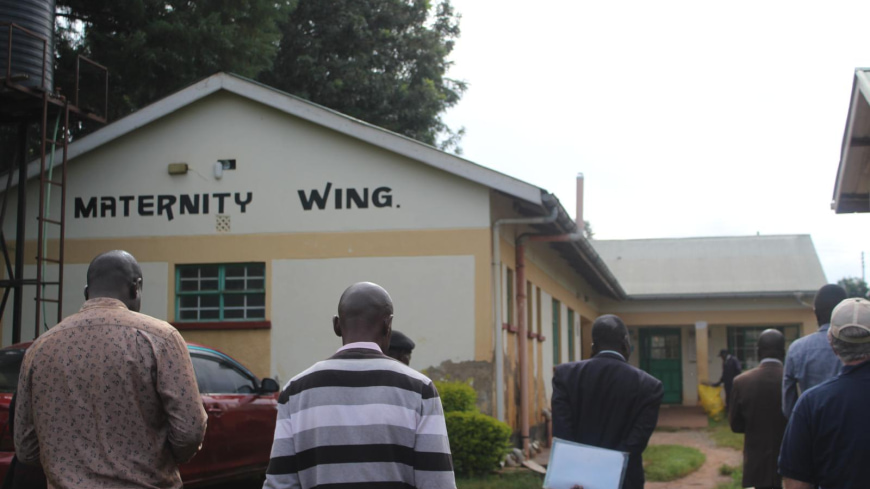
The Matunda Health Centre Water Project in Kenya offers a powerful example. For nearly 16 years, the community has maintained a water system serving a health center that cares for approximately 30,000 people in the surrounding area. The local CBO continues to seek funding for repairs and maintenance while planning improvements to the facility. But the significance of that commitment goes far beyond keeping water flowing. Community members shared that the project helped more mothers give birth at Matunda rather than being referred elsewhere. For expectant mothers, having access to care within their own community can mean avoiding the added uncertainty and challenges of traveling to another facility during an already vulnerable moment. What stands out is not simply that the water system has lasted, but that the community's continued investment in it has helped sustain a service that families depend on during some of life's most important moments.
A Seat at the Table
Engineering systems serve people with different needs and perspectives, and the decisions surrounding them should reflect that. A water system, for example, might serve families, schools, and healthcare facilities, each with different priorities. But if only a handful of voices are heard, how can a project truly meet the needs of everyone who depends on it?
Strong community-based organizations make room for those different perspectives. This can mean including people of different ages, backgrounds, and community roles in discussions about a project's future, rather than leaving decisions to only the most visible or influential members.
During EWB-USA's 2026 Kenya Impact Trip, the team found that some of the most valuable conversations happened outside formal meetings. While walking through communities to visit project sites, team members heard from people who might have been less likely to speak up in a group setting. The report also found that strong CBOs often held regular meetings and maintained communication with community members to better understand and represent their interests. Behind every system built are people whose needs, hopes, and voices deserve to matter long after construction is complete, and those making decisions should never lose sight of who they're making them for.
More Than a Manual
For community-based organizations, planning for the future also means preparing for changes in leadership. When longtime leaders step down, or new members take on responsibilities, the knowledge needed to keep a system running should move with them. From maintenance procedures to lessons learned over the years, that knowledge should be shared rather than left in the hands of just one person.
At the Matunda Health Centre in Kenya, that commitment to sharing knowledge was evident nearly 16 years after the water project's completion. When EWB-USA's team visited, they were joined not only by current community leaders but also by former CBO members who had helped oversee the project's original construction. Years later, those members were still involved, bringing their experience and knowledge of the system to the next generation of leadership. The community had also developed a more hands-on approach to keeping that knowledge alive. Night guards responsible for operating the water pump trained one another, passing along the skills needed to keep it running. For a health center where access to water has helped mothers receive care closer to home, preserving that knowledge means protecting something far more important than equipment.
But another healthcare facility visited during the Kenya Impact Trip revealed what can happen when that knowledge rests with just one person. At this facility, a medical waste incinerator became temporarily nonfunctional after its only trained operator unexpectedly passed away. The challenge wasn't necessarily the equipment itself, but the absence of someone with the knowledge to operate it. The community needed to identify and train a replacement before operations could resume.
Together, these experiences show why the plan for knowledge transfer deserves attention long before a system is completed. Training multiple operators, keeping maintenance instructions accessible, and preparing new leaders to take on responsibilities can help communities avoid losing essential knowledge when circumstances change. The goal isn't simply to build something that works today, but to make sure the people responsible for it have the knowledge to keep it working tomorrow.
Built to Adapt
Strong community capacity does not make a project immune to setbacks. In one Ecuador water project, a trusted CBO had successfully collected fees and maintained the system for years. Then COVID-19, national strikes, and migration for work disrupted the community's ability to collect funds. When the pump eventually broke, there wasn't enough money available to repair it.
The community hadn't lost its commitment to the project. Circumstances had changed, and the systems that once supported its success were no longer enough. It's a reminder that community capacity isn't fixed. Even a CBO that is well-prepared when construction ends may face challenges years later that require new resources, knowledge, or support.
This is where continued partnerships could make a difference. Through its Purposeful Partnership Model (PPM), EWB-USA is working to build stronger, longer-lasting relationships with local organizations and support community-led solutions. By emphasizing partnerships rather than individual projects alone, the model offers an opportunity for communities to have trusted, in-country partners they can turn to as their needs and circumstances change. After all, building infrastructure that lasts also means recognizing that the people caring for it may need different kinds of support along the way.
More Than the Final Brick
The CCI gives EWB-USA a way to consider these dimensions of community capacity consistently, while recognizing that a single score cannot capture every circumstance. For project teams, the questions are practical: Is there a locally led plan for maintenance? Can the CBO securely manage funds? Are different community voices represented? Will knowledge remain available when leaders or operators change?
These are questions EWB-USA works through alongside local partners, keeping community leadership and decision-making at the center of the process. By considering maintenance, financial planning, and knowledge transfer from the beginning, project teams can help communities prepare for the responsibilities that continue long after construction.
The findings from EWB-USA's 2026 Kenya Impact Trip show why this matters. Among the projects visited, 75% of those with strong community capacity scores also received high functionality scores, while 63% received high sustainability scores. These findings reinforce the correlation between strong local organizations and infrastructure that continues serving communities over time.
At Matunda Health Centre, we've seen what that commitment can mean for the people who depend on these systems. Years after construction, the community continues to care for infrastructure that has helped make essential healthcare services more accessible.
The final brick may mark the end of construction, but the work that gives a project its lasting value continues in the hands of the community. Every repair planned, responsibility passed on, and voice included helps protect the opportunities that reliable infrastructure makes possible.