What the Classroom Can't Teach an Engineer
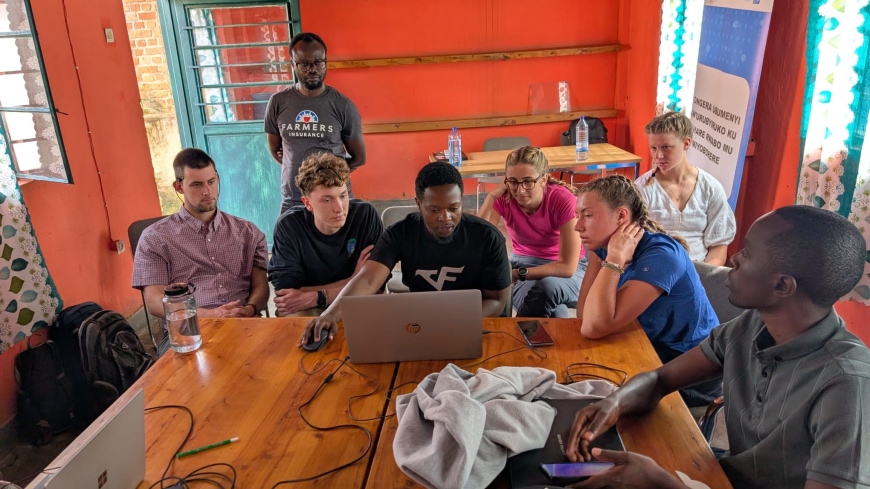
As an engineering student, I've spent countless hours working through equations, analyzing data, and trying to understand concepts that didn't quite click the first time around. Most of the time, there's a process to follow. You're given a problem, you figure out what information you have, and you work toward a solution.
But in the real world, problems don't always come with a clear set of instructions, and there's rarely just one right answer.
When I first got involved with Engineers Without Borders USA (EWB-USA), I was excited to see how engineering could be applied beyond the classroom. I've always understood that engineering is about more than just technical knowledge. We're taught the importance of communication, teamwork, leadership, and considering the people who will be affected by our work. But I've also realized there's a big difference between understanding why these skills matter and actually having to use them in situations where the outcome affects real people.
Through my involvement with EWB-USA, I've had the opportunity to learn about projects and hear from engineers and volunteers working directly with communities. One thing that stood out to me was how much of their work involves challenges that aren't necessarily technical.
Take a water infrastructure project, for example. From a classroom perspective, the assignment might be to design a system that provides a certain amount of clean water to a community. You'd consider things like materials, costs, and efficiency, and eventually come up with a design that meets the requirements.
But what if the materials needed for that design aren't easily accessible locally? What if the system requires maintenance that would be difficult for the community to manage long-term? Or what if the community has a completely different perspective on what the biggest problem actually is?
Suddenly, the challenge isn't just figuring out how to make the system work. It's understanding what would make it work for the people who will actually be using it.
These are things we talk about in engineering courses, but they're much harder to fully understand until you're faced with them.
I've always believed that good leadership means listening, considering different perspectives, and recognizing that you don't have to be the person with every answer. Those aren't new ideas, and they're certainly not things engineering students are unaware of. But knowing what good leadership looks like and being able to practice it in an unfamiliar environment are two different things.
As both an engineering student and a marketing intern with EWB-USA, I've had the opportunity to interview volunteers and staff about their experiences working on projects around the world. Listening to them reflect on their work has made me think more about how much engineers can learn from the communities they work with. Someone who has lived with a particular challenge for years may understand aspects of it that an engineer wouldn't recognize during an initial assessment. Being able to listen, adapt, and work together isn't just a nice addition to technical knowledge. It's part of what makes an engineering solution successful.
And I think students would benefit from having more opportunities to develop those skills before entering the workforce.
Of course, many engineering programs already provide some hands-on experience. Senior capstone projects are a great example. They give students the chance to apply what they've learned to larger, more realistic engineering challenges. Depending on the university, students may also have opportunities to work on projects in other courses.
But I do wonder whether that's enough.
For many students, capstone is one of the biggest opportunities to put everything they've learned into practice, yet it typically happens during their final year. By that point, students are already balancing demanding classes, job applications, and preparing for life after graduation. It's a lot to take on, especially when it may be one of their first experiences managing a project of that scale.
At EWB-USA's National Conference earlier this year, I had the opportunity to meet and speak with students from university chapters across the country. What stood out to me was how genuinely excited and proud they were of the projects they were working on. But beyond that excitement, I also saw students exchanging ideas, learning from one another's experiences, and thinking critically about how they could improve their approaches to better serve the communities they worked with. These students weren't just completing assignments for a grade. They were taking ownership of projects that could make a real difference in communities they might otherwise never have connected with. I think there's something especially valuable about that kind of motivation. When students can see the purpose behind their work and know that people are depending on its outcome, the experience becomes more than just another assignment to complete.
And while internships, engineering organizations, and volunteer opportunities can help students gain experience earlier, I don't think students should have to rely on finding those opportunities on their own. Not everyone has the same amount of free time, financial flexibility, or access to extracurricular experiences. Making these opportunities more accessible is a challenge that requires effort from both universities and organizations. EWB-USA is helping bridge this gap through initiatives like its STEM program for two-year colleges, which connects students who may have fewer opportunities for hands-on engineering experience with professional networks and resources. Programs like this are a step toward making meaningful engineering experiences available to more students, regardless of where they begin their education.
I'm not suggesting that engineering programs need to add even more work to an already challenging course load. But I do think there's room to incorporate smaller, meaningful projects into existing courses, especially earlier in a student's education. Even opportunities to work with local organizations, communicate with real stakeholders, or navigate problems that don't have a predetermined solution could help make the transition from classroom learning to professional engineering feel less overwhelming. Organizations like EWB-USA demonstrate the value of these experiences by giving students opportunities to apply what they're learning in the classroom while developing skills that are difficult to teach through coursework alone.
My experience with EWB-USA has made me appreciate the value of learning from people who are already doing this kind of work. Hearing about their challenges, the decisions they've had to make, and the lessons they've taken away has given me a better understanding of what engineering can look like outside of school.
And that's something I think more students deserve the chance to experience firsthand.
Engineering education gives us an important foundation. We learn how to think critically, solve problems, and consider the broader impact of our work. But there's only so much we can learn about applying those skills without actually being placed in situations that challenge us to use them.
Organizations like EWB-USA help bridge that gap, creating opportunities for students to grow as engineers while contributing to work that matters beyond the classroom. Supporting these opportunities means investing not only in the communities these projects serve, but also in the next generation of engineers.
The classroom can teach us what makes a good engineer. Real-world experiences give us the chance to figure out how to become one.
And ideally, we shouldn't have to wait until our final year to start finding out.
If you enjoyed reading this piece and would like to support the work Engineers Without Borders USA is doing to provide meaningful learning and workforce development skills to the next generation of empathetic, humanitarian engineers, please donate here.