How Sanitation Design is Advancing Women's Health and Safety in Bolivia
.JPG?resize=870x0&crop=870x489)
Engineering Dignity: How Sanitation Design is Advancing Women’s Health in Bolivia
Across many communities worldwide, the impacts of water and sanitation access are not experienced equally. For women and girls, access to water is closely tied to safety, health, and dignity; when basic needs like adequate restroom facilities are not met, the impacts on women's lives extend beyond just inconvenience. Their daily routines are reshaped, and their education and long-term well-being are often affected. From challenges in managing menstrual hygiene to experiencing unsafe situations, the health and safety consequences that women face in areas with limited access to water and sanitation services are often left unspoken.
The impact of limited access to safe water and sanitation is something EWB-USA project teams have seen firsthand. A powerful example comes from the community of Carijana, Bolivia.
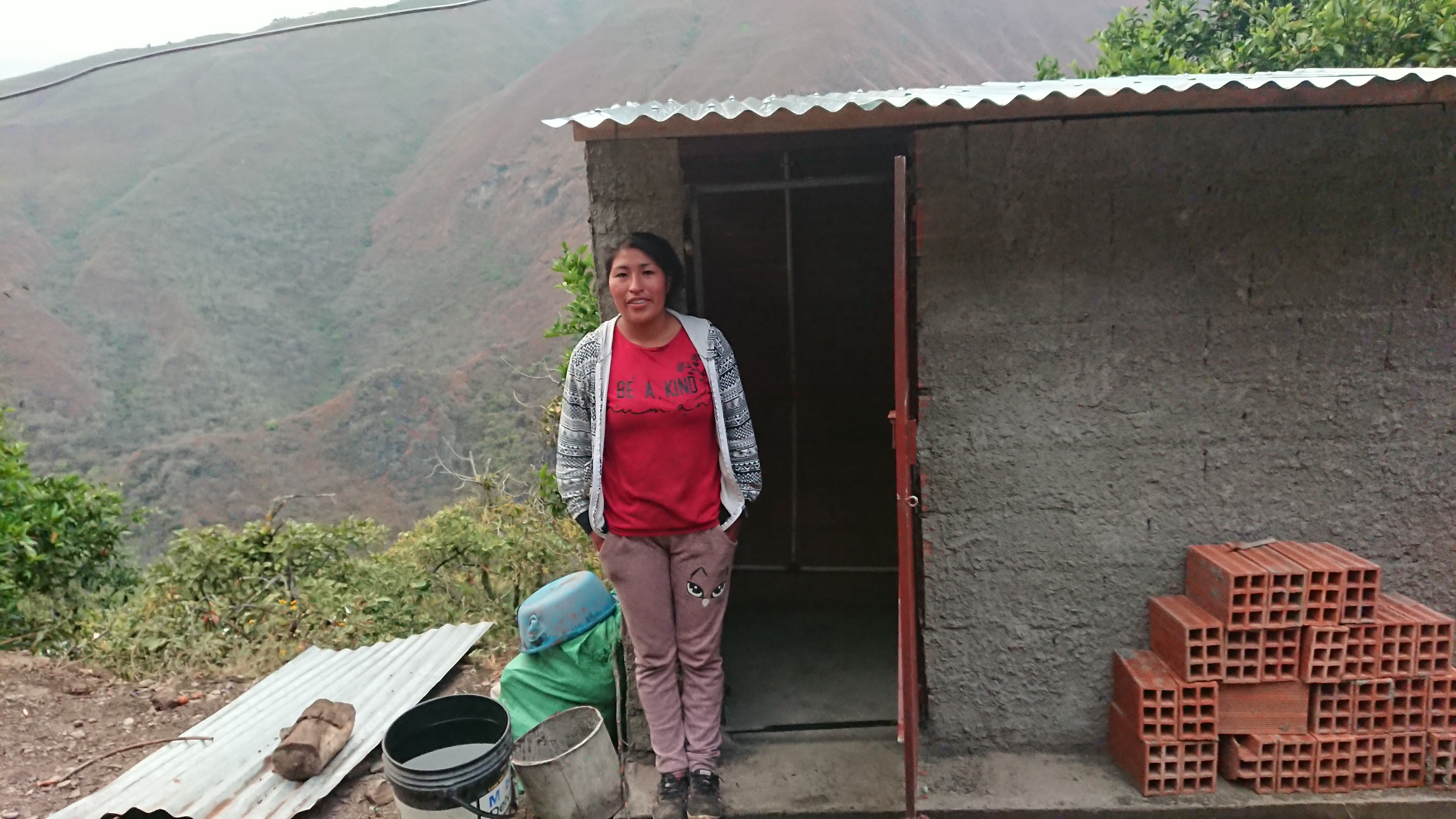
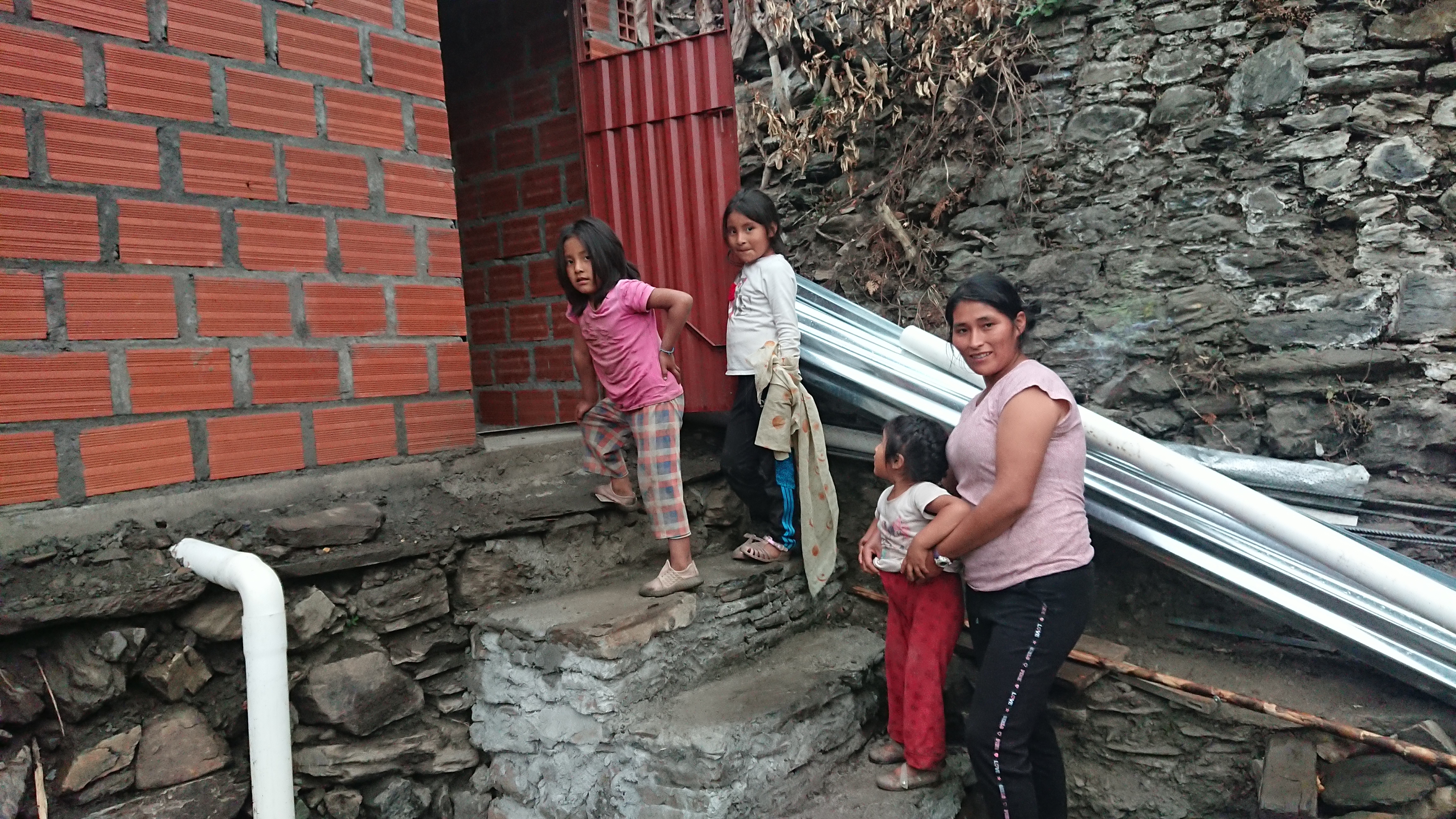
When Engineers Without Borders USA’s University of Pittsburgh Chapter began working with the community, the initial challenge was clear: unsafe water. Open defecation had led to contamination, with local water sources testing positive for E. coli and other fecal coliforms. The technical response was direct; over the course of the project, the team partnered with the community to construct 55 household and school latrines, targeting a measurable improvement in water quality and public health.
And it worked. Water testing over time showed a transition from high-risk contamination levels to low-risk, safer conditions.
But as the partnership deepened, it became clear that the impact of the project extended far beyond water and sanitation.
Beyond the Technical Feedback
Through household surveys, conversations with their NGO partner, and women’s focus groups, a different set of challenges came into focus: limited access to menstrual health resources, lack of privacy, and safety concerns shaped by how and where women and girls were able to access latrines.
Conversations between the community and the project team drove intentional design; not just of infrastructure, but of the implementation process.
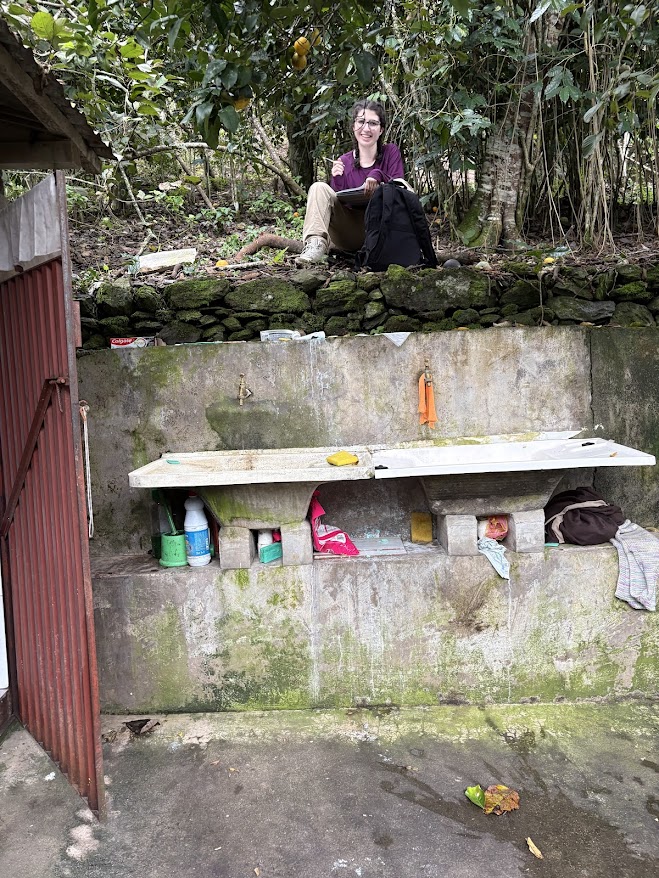
While the University of Pittsburgh chapter included women’s focus groups early on, those women’s focus groups were not always fully private. They realized that even minimal male presence shaped what could be shared. So in 2023, the team deliberately shifted their approach. They requested a female translator, held men’s and women’s sessions simultaneously, and deliberately created a closed, women-only environment.
Even then, expectations of silence were ingrained in the participants. The kind of quiet that lingers in a room where people are used to being careful with their words. Volunteers came in prepared with questions and pages of notes meant to guide discussions. However, after a few minutes, the structure hindered real conversation. They shifted to a notes-down approach, and they made it clear that they weren’t looking for specific answers, simply whatever the women wanted to share. From there, the conversation opened up; Nicki Wealand, a volunteer from the Pitt Chapter, shared, “One of the only female leaders of the community began a conversation about the latrines, restating that the latrines have been important for the women, giving them a place to safely practice taking care of their menstruation needs. Once she began sharing her stories, other women started agreeing and sharing their own stories.”
The women who joined and echoed how the latrines had become “a place to safely practice taking care of their menstruation needs,” noting that that wasn't possible before. They spoke about their daughters; how, in the past, girls were given menstrual hygiene products and left to figure it out themselves, and how that was beginning to change. What had once been handled in secrecy, or without guidance at all, was now a heart-to-heart, a dialogue to teach and learn, thanks to the privacy offered by the new latrines.
The shift caused by the women 's-only feedback sessions was both practical and cultural. Beyond delivering feedback, the sessions helped to build trust, and that trust helped to reshape the engineering design process.
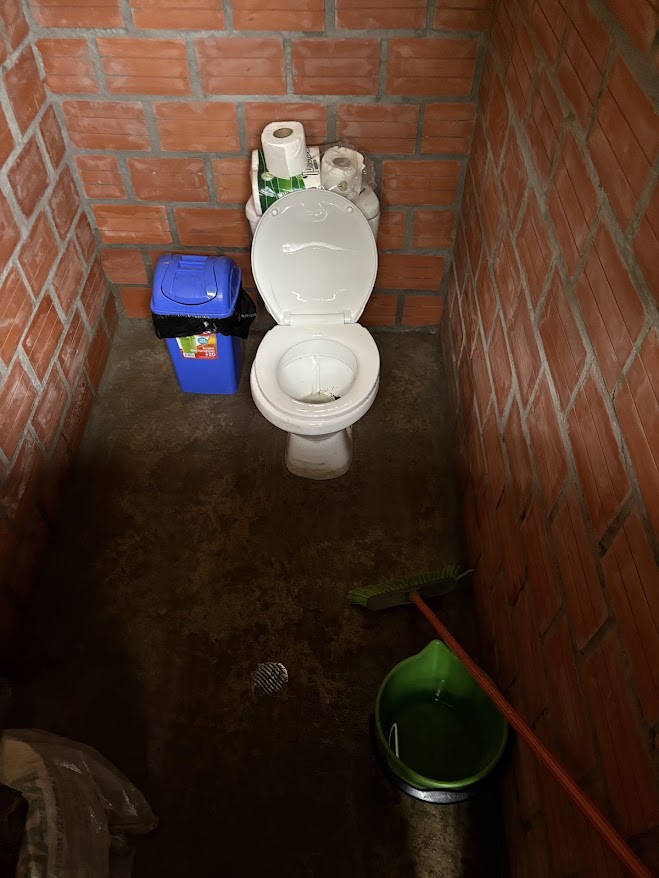
Two key features were implemented across latrines, based on the insights the team gained around the community’s menstruation needs, including retrofits to existing structures:
- Interior locks, ensuring complete privacy for users
- Dedicated trash bins, providing a safe and discreet way to manage menstrual products
These additions may seem small, but their impact is both measurable and deeply meaningful to the women of Carijana.
The conversation then moved beyond routine and into vulnerability. Women shared fears that had long shaped their daily decisions; they spoke about the risk of going into the woods alone at night, the precautions taken after sunset, the quiet calculations made to stay safe. The new latrines reduced exposure to one of the most serious risks women identified in the community: sexual assault.
Previously, women and girls often had to travel into the woods at night for restroom use, creating safety concerns. It was during private focus group discussions that the team learned just how serious that risk was; women shared that “sexual assault is very common in the community,” “many young girls had been subjected to having children with men they would not marry,” so fear often dictated when and how they could leave their homes. Some avoided going out at night entirely, resorting instead to using buckets indoors to stay safe. With time, women in the community felt more comfortable telling their stories to the team. Some stayed after, approaching the volunteers more privately, offering thanks, or sharing experiences they had not said out loud before.
And with accessible, private latrines, they reported that fear has been significantly reduced.
Fast Forward
About two years later, by the 2025 monitoring trip, the difference could be felt. Conversations flowed more easily, women spoke more openly, and there was a quiet confidence in how they described the impact; the latrines had brought greater safety, dignity, and ease to daily life.
The data reflects this as well. Household surveys indicate improvements in overall health and quality of life, alongside reduced disruption to daily activities. Educational efforts tied to the project, including WASH lessons for children, are also creating long-term change, with more students demonstrating understanding of hygiene practices each year.
Over the course of seven years, this project has evolved from a water quality intervention into something broader: a model for how community partnership can uncover and address hidden dimensions of infrastructure.
It is also a reflection of leadership. With four female project leads dedicated to advancing menstrual equity (Nicki Wealand, Kylie Wishneski, Veda Panchagnula, and Claire Gendron), the team maintained a consistent focus on women’s health outcomes, ensuring that these perspectives were not only heard but integrated into design decisions.
The result was more than just 55 latrines.
It was a system that reduced contamination, supported education, and created safer, more dignified conditions for women and girls.
It is a reminder that engineering solutions are only as effective as the questions we are willing to ask, and the voices we are willing to listen to.
In Carijana, those conversations changed the design. And in doing so, they bettered lives.
 |
 |
 |
_(1)-0001.jpg) |
-0001.jpg) |
 |